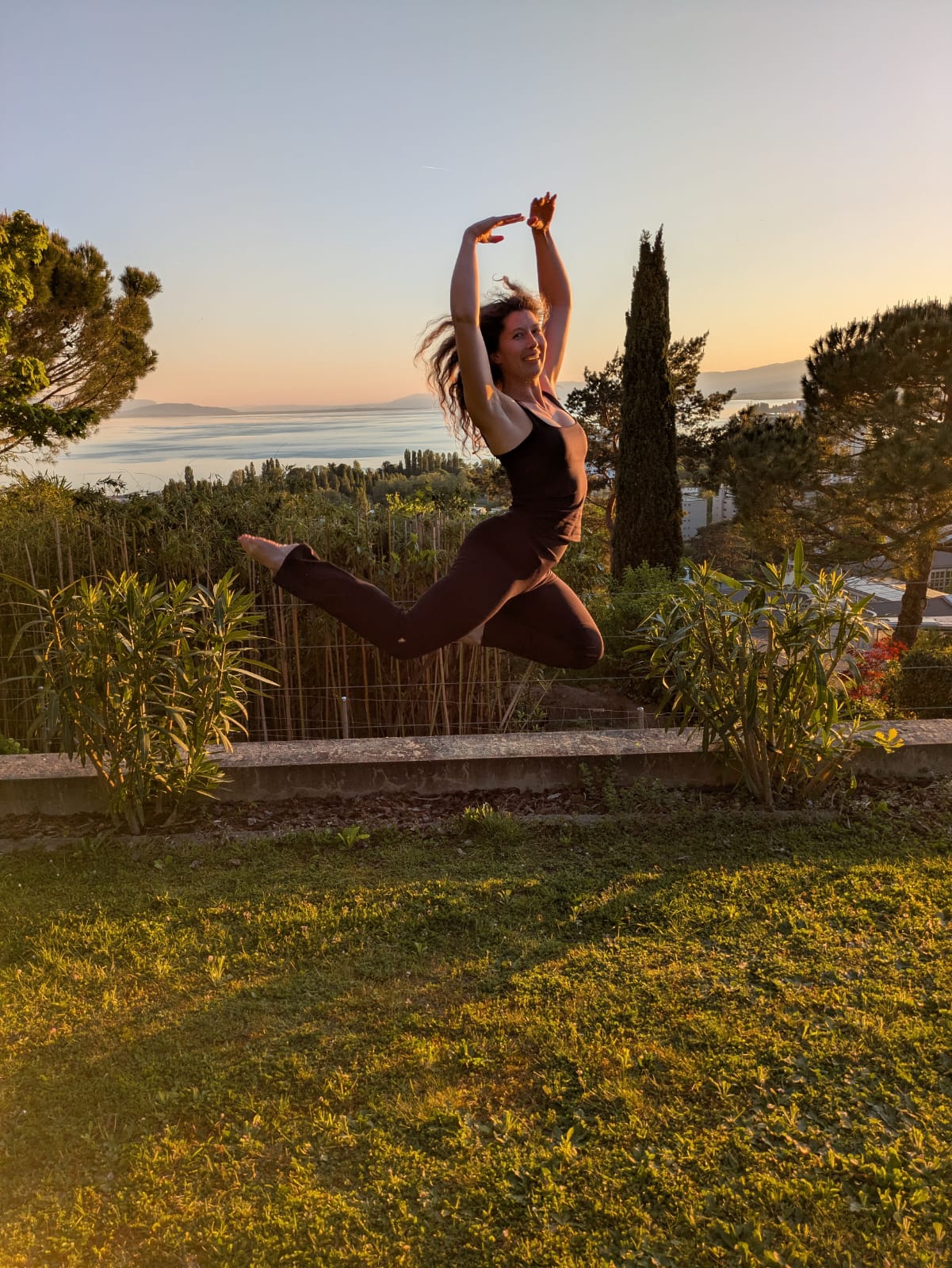
Last month, I had the honour of being invited to celebrate the 100th anniversary of the Margaret Morris Movement (MMM) in Switzerland, where I taught a series of dance workshops to an international group of participants. For those unfamiliar with the method, MMM was developed in the 1920s by Margaret Morris, a dancer and physiotherapist who believed deeply in the connection between movement and health. The method is known for its many therapeutic benefits, as well as its distinctive aesthetic—defined by strong, flowing, and geometrical shapes.
Having travelled to Switzerland several times to teach MMM, I already knew how special these experiences can be. Each visit has left a lasting impression, so I naturally accepted the invitation and flew to Geneva on the 22nd of April with great anticipation.
Most of the workshops took place in Lausanne, a city renowned for its steep hills and stunning setting along Lake Geneva. The event brought together teachers and participants from across the world, including Canada, Japan, France, Italy and the United Kingdom. Over several days, we explored the full MMM syllabus—from its “colours” (the different levels of the method), to technique, and finally to its therapeutic applications.
One of the aspects I value most about MMM, particularly as someone with a background in ballet, is its inclusivity. The method truly caters to all ages and abilities, offering both intricate sequences for experienced dancers and more gentle, accessible movements for those newer to dance. It was incredibly inspiring to share the space with participants ranging in age from 9 to 90—each bringing their own energy and interpretation to the practice.
On the first day, we travelled to Leysin, a village nestled high in the mountains and deeply connected to the history of the method. It was here that Margaret Morris once taught dance therapy to patients recovering from tuberculosis. At the time, Leysin was home to over 30 sanatoriums, where treatment focused on movement alongside fresh air and sunlight.
In this unique setting, I led a class centered around anatomy, encouraging participants to develop a deeper appreciation for the human body. We explored how dance can support physical health— enhancing mobility, encouraging muscle activation, and contributing to both cardiovascular and neurological wellbeing. After the session, we spent time in the village, dancing outdoors and immersing ourselves in its history. There was something almost cinematic about it—it felt as though we had stepped into The Sound of Music, moving freely through the hills.
On the final day, I taught an introductory class designed for those new to the method. The aim was simple: to help participants connect with their bodies, rediscover the joy of movement, and leave feeling inspired. The course concluded with a performance by various MMM schools, showcasing the diversity, creativity, and vibrancy of the method.
After several days of dancing in Switzerland, I returned to London feeling both serene and energised, carrying with me a renewed sense of purpose. As I write this, I’m already tempted to plan my next trip back—but that will have to wait until next year. Until then, I’ll continue sharing my passion for movement, encouraging others to dance, and to take care of their health through mindful, joyful practice.